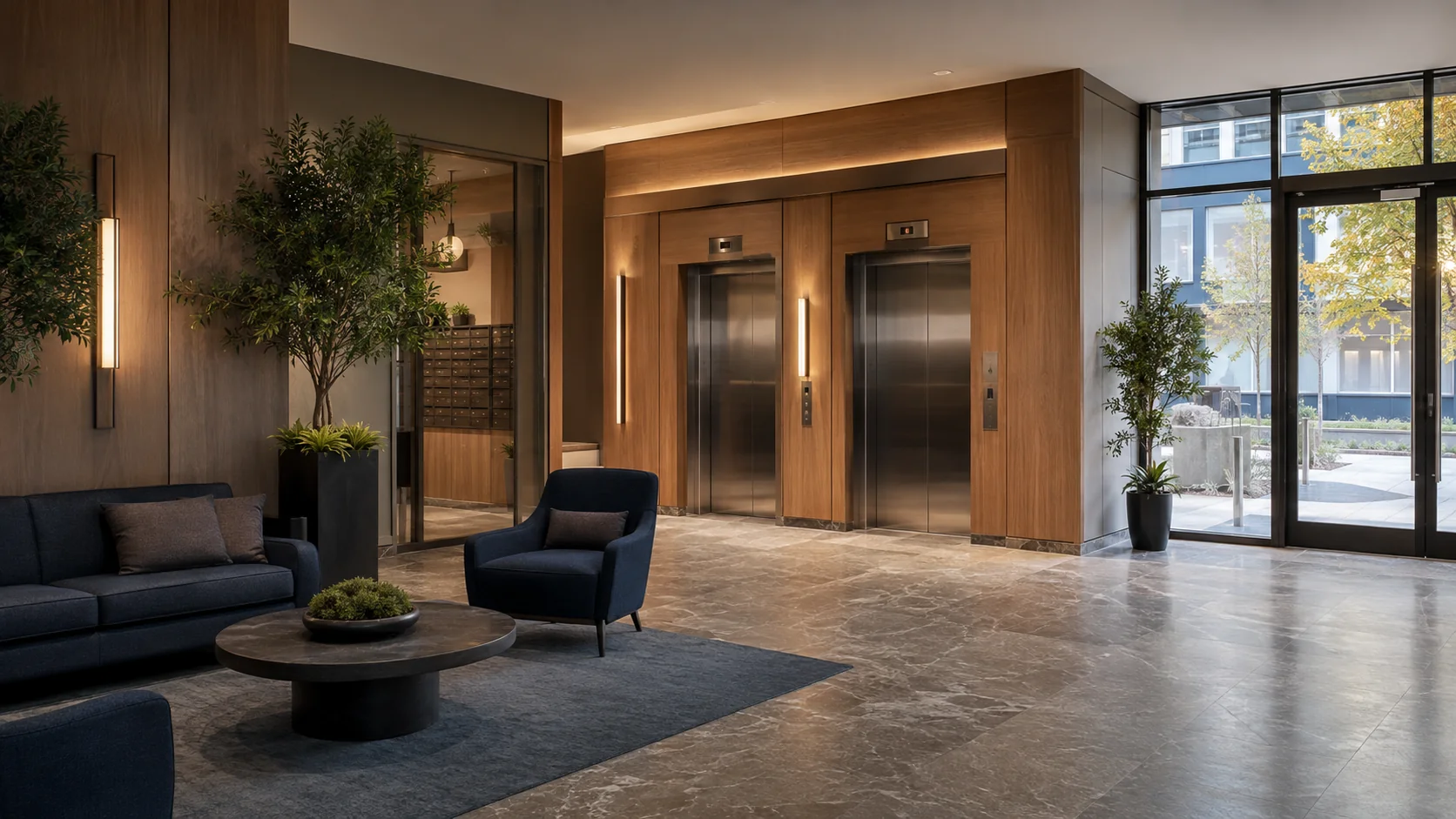
Map the common spaces from entrance to amenity
Identify the authorized areas and the surfaces within each. A written route helps the proposal stay clear about which entrance, elevator or shared room it covers.
- Entrance mats and accessible lobby glass
- Elevator interiors and common corridors
- Shared floors, rails and agreed touchpoints
- Amenity rooms and common washrooms
Plan for a building that stays occupied
Residents, visitors and deliveries continue moving through a building outside office hours. Include permitted working times and the access requirements for each area in the cleaning brief. Agree how floor work will be sequenced if residents still need the entrance, lift landing or corridor during the visit. Ask what wet-floor warnings and access arrangements the provider proposes, where equipment and cords can be kept without obstructing aisles or exits, and who checks the area before normal use resumes. Record how the building contact is notified if the area cannot be returned to the agreed condition; a planned finish time alone does not establish that a floor is ready for use.
CCOHS: workplace housekeeping, circulation and completion checks
Separate residential and commercial responsibilities
Where a property combines shops, offices and homes, identify which common areas the strata can authorize. Private suites and tenant premises require their own clearly agreed scope.
Give busy areas an appropriate frequency
List entrances, lifts and amenities separately rather than assigning one frequency to the entire building. Note booking patterns, seasonal needs or known periods of heavier use for review.
- Illustrative scope line for discussion — area: shared amenity room; tasks: agreed cleared tables and accessible floor; proposed frequency: after booked events, subject to availability; approving contact: authorised building manager; exception: room still occupied, so record unavailable tasks and agree the next step. This is not an actual client scope or an offered schedule.
Compare the tasks and frequency behind a proposal
Record an occupied or unavailable room against the agreed task
Make decisions clear for the council and manager
Name the person who approves the proposal and the person handling everyday questions. Record how additional tasks and changed access are approved, alongside the agreed scope and price.