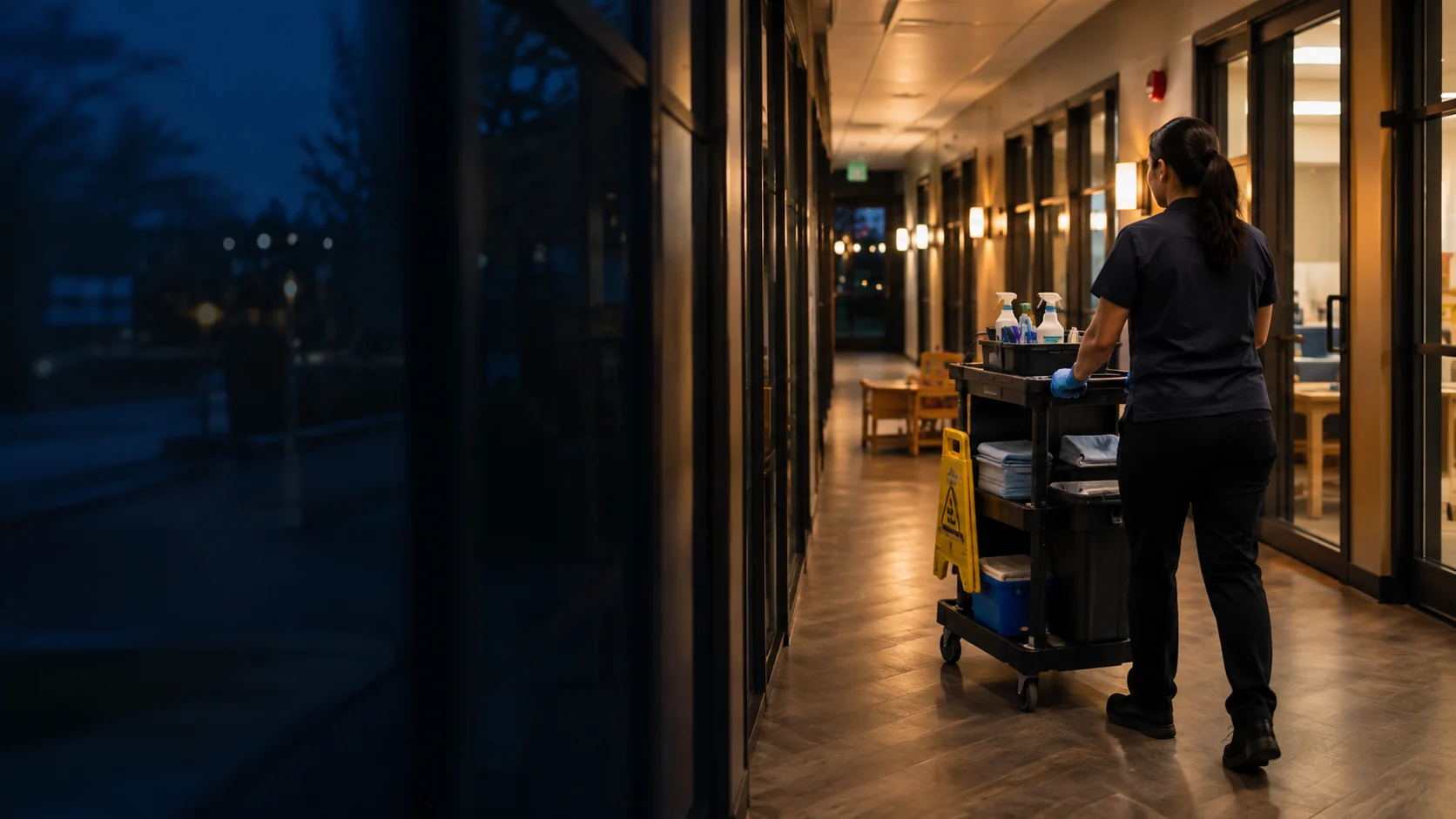
“Daily cleaning” can describe a visit schedule without describing a single task. It does not tell you whether an accessible desk is wiped at every visit, a meeting room is included after use or periodic floor work is separately arranged.
Choose the tasks and their cadence together. Increasing the number of visits will not solve an omitted task, and giving every room the same frequency may ignore how differently those rooms are used.
Start with the office's actual pattern
Look at where people arrive, meet, eat and work—not only the office's total area. A frequently used visitor space and a quiet room may have different needs even if their floor areas match. Hybrid attendance can also concentrate use on particular days rather than reduce it evenly through the week.
This is a reason to describe the working pattern, not a recommendation to leave an infrequently used room unchecked. Visible soil, unexpected events and the workplace's own requirements still matter. The relevant surface-care directions and any facility-specific rules must be respected.
Health Canada's office-building guidance treats routine cleaning, building upkeep and inspection as connected practices. It does not supply a universal commercial visit schedule or make a recurring cleaning agreement an indoor-air-quality assessment.
Give each task its own recurrence
A practical schedule can distinguish:
- Work included on each agreed visit.
- Work linked to a particular room's use, with a clear arrangement for identifying that need.
- Periodic work agreed for a separate interval or booking.
- Unexpected conditions that need a different response rather than waiting for the next visit.
For instance, the regular office route might include agreed accessible surfaces while a separately specified carpet treatment uses another window and price basis. The recurring visit does not automatically include that treatment, and the periodic treatment does not replace the regular room tasks.
The existing office guide separates periodic work from the normal visit. Use that distinction when building the schedule rather than putting every surface under the same label.
Keep an ordinary need separate from a missed task
Suppose a meeting room is cleaned as agreed, then used heavily before the next scheduled visit. The new condition does not, by itself, prove the earlier visit was missed. The question may be whether the schedule matches the room's use.
By contrast, if the room was available and an agreed task was not completed at its scheduled time, that belongs in the service follow-up. The quality-control guide helps describe that difference without turning every concern into an automatic extra booking.
There is a third possibility: the task was never in the accepted scope. More visits would still leave it undefined. Resolve the task, responsible party and frequency before treating a higher monthly total as a complete answer.
Decide what happens between visits
CCOHS's housekeeping guide describes housekeeping as ongoing work with assigned responsibilities, not only an end-of-shift cleanup. That does not assign every daytime need to an external cleaner.
The office needs to know how an ordinary new issue is reported and who handles work outside the recurring agreement. A spill, suspected contamination, damaged fixture or another hazard may call for a different immediate workplace response. Do not wait for an agreed periodic task, or assume a routine cleaning enquiry books an emergency service.
Review the pattern before changing the whole contract
When use changes, identify what changed: a busier room, an additional occupied day, a different floor-care requirement or a task that was not included. The adjustment might concern one task's recurrence, a particular visit or a separately agreed project—not every room at once.
Keep the comparison on the same basis: actual rooms, tasks, visit pattern, periodic work and between-visit responsibilities. The cost guide explains why proposals with different included work are not comparable merely by their totals.
For an initial enquiry, give the office location, room types, ordinary use pattern and desired tasks through the existing request path. The provider must confirm the accepted scope, availability and price. This guide supplies no universal daily or weekly minimum, staffing productivity rate, disinfection schedule, health guarantee or service booking.